
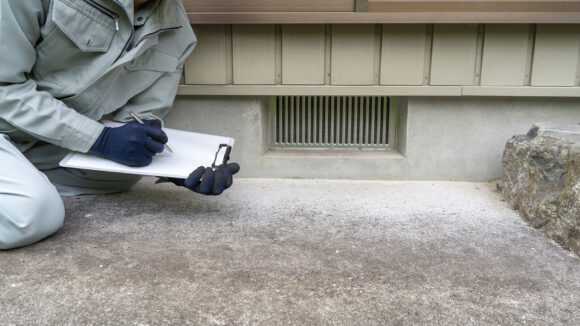
A review of concrete foundations of public buildings in northeastern Connecticut, including schools and fire stations, has found no widespread deterioration problems like what’s plagued hundreds of residential homeowners.
Out of 100 structures surveyed, only a handful showed signs of damage caused by an iron sulfide known as pyrrhotite, which causes concrete to crack and break gradually as it becomes exposed to water and oxygen. Material containing pyrrhotite has been traced to a Willington quarry used between 1983 and 2015.
“Nothing was revealed through our research that would point to a widespread, pervasive, and visibly verifiable pyrrhotite infection problem in non-residential public use buildings in the northeast corner of Connecticut,” wrote Michael Maglaras, superintendent of the Connecticut Foundation Solutions Indemnity Co. Inc, an insurance company which was created by the General Assembly to oversee a state homeowners assistance program. The organization was tasked by lawmakers last year to determine the extent of the problem in non-residential buildings.
The report notes how the placement of non-residential concrete differs from residential projects and is often subject to higher quality control standards.
Topics Carriers Connecticut
Was this article valuable?
Here are more articles you may enjoy.
 Oaktree’s Deal to Buy A-Cap Insurer Crumbles, Spawning New Talks
  How Federal Ban on Intoxicating Hemp Products Will Reshape Risk, Coverage
  Chubb Q3 Net Income Down Slightly on More Catastrophe Losses
  Report: Auto Insurance Total Loss Frequency Climbs, More Drivers Pay Repairs
 From This Issue