

Two United Arab Emirates-linked supertankers came under attack while sailing “dark” through the Strait of Hormuz, threatening one of the main methods of getting non-Iranian crude to the global market during the war.
A seafarer died and several were injured, Adnoc L&S, the shipping arm of the United Arab Emirates state oil giant, said in a statement. The nation’s defence ministry said Iran targeted two ships with cruise missiles. A third, smaller tanker also came under attack, maritime security companies said.
The incidents are the latest in a string of attacks on commercial shipping that have shattered an interim peace pact between Washington and Tehran in mid June. They also involved two entities — the UAE and South Korean shipowner Sinokor Group — that have proven pivotal in transporting barrels through the strait over the past few months.
The vessels have been performing “shuttle runs” with their transponders turned off to avoid detection, a practice that’s been going on for weeks and helped to significantly boost oil flows through the waterway that in normal times accounts for about a fifth of the world’s supply. Both last broadcast a satellite signal several days ago, a sign that they might still be engaged in shuttling.
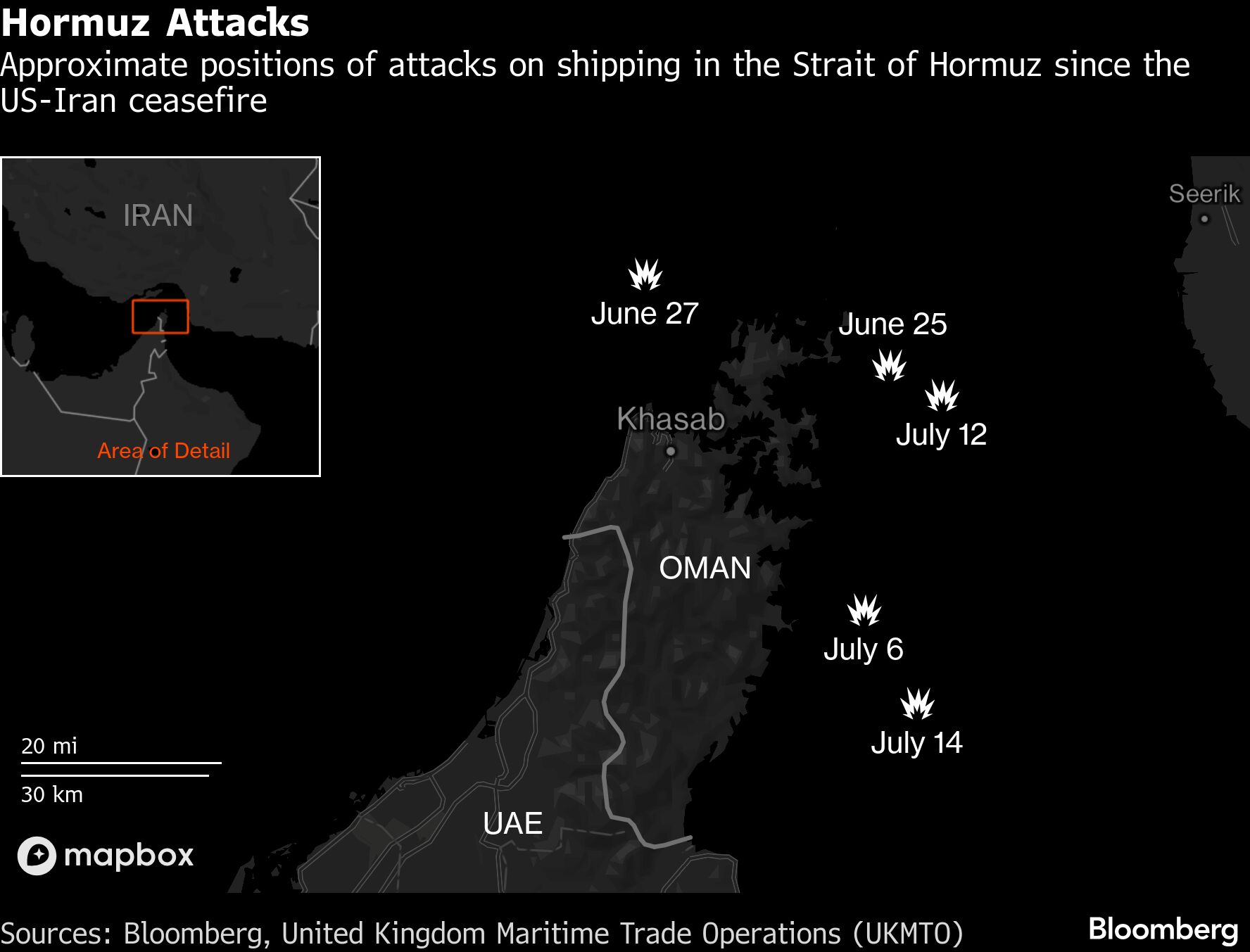
The attacks, less than a day after President Donald Trump said the US would protect shipping for millions of dollars per transit, will raise fresh questions about its ability to guarantee safe passage.
“Shippers need stability to operate effectively,” said John Bradford, a former US naval officer and a co-founder of the Yokosuka Council on Asia-Pacific Studies. “The start-and-stop, and otherwise dynamic, security situation in the Strait of Hormuz and its adjacent waters is a nightmare scenario for shippers.”
Visible transits have dropped sharply over the past few days. Some shipowners said they were pausing transit plans in light of the developments, according to people familiar with the plans. Many others already said they’re staying away, a fact that has made Sinokor’s role even more critical.
The third attacked ship was indicating as not under command, according to vessel-tracking data compiled by Bloomberg. A representative for the carrier’s owner didn’t immediately respond to a request for comment.
Significant Damage
The two oil supertankers that came under attack, the Al Bahyah and Mombasa B, suffered significant damage, Adnoc L&S said. Mombasa B was on a so-called time charter. Sinokor, listed as the ship’s commercial manager on the Equasis shipping database,didn’t immediately respond to a request for comment.
The shuttling practice had helped the UAE to surge production and exports last month.
It’s too soon to say how the attacks will impact flows. Some owners are considering to no longer fix ships to enter the Persian Gulf in the near term, instead choosing to only arrange vessels to call at ports along the Gulf of Oman, the Arabian Sea or the Red Sea instead, they said.
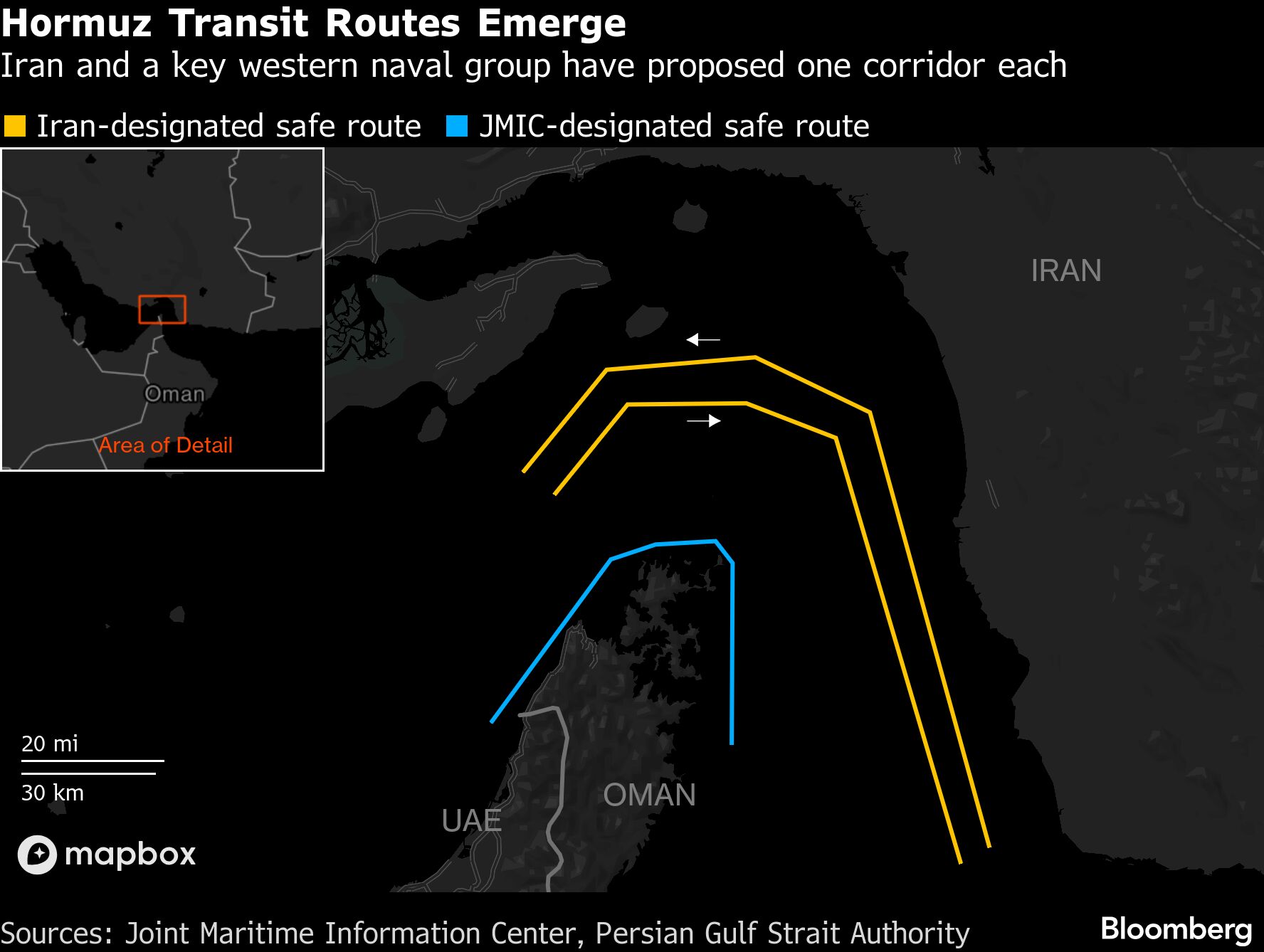
Some tanker owners are concerned that the transshipment points to receive Adnoc’s cargoes off Fujairah and Sohar may not be as safe, after these latest developments and what the UAE said was Iranian missiles targeting its tankers in the area, they said.
“The UAE reserves its full right to respond to this escalation and to take all necessary measures to protect its territory, its citizens and residents, in a manner that safeguards its sovereignty, security, and stability, and protects its national interests,” the country’s ministry of defence said in a post on X.
Oil Rising
Oil prices have already been rising as the US and Iran exchanged fresh attacks. Brent futures are up almost 14% this week, though remain well below their wartime peak of more than $126. Any reduction to flows through Hormuz would tighten a market that saw an influx of supply in the weeks after the interim peace deal was struck.
On Tuesday, Trump said that the US would begin seeking a 20% charge for protecting flows through Hormuz.
Vessels have been transiting with US protection in recent weeks, though it wasn’t immediately clear if the attacked vessels were doing so.
Sinokor vessels have been pivotal in moving non-Iranian oil out of the Persian Gulf. It’s at least the second time since the interim peace pact was signed that one of its vessels has come under attack in Hormuz.
India’s ministry of external affairs said that it was deeply concerned by the attacks on vessels that had led to the loss of one of the country’s seafarers. It said that two other crew suffered serious injuries. The country summed the Deputy Chief of Mission of the Iranian embassy in New Delhi “and a strong protest against these attacks was lodged with him.”
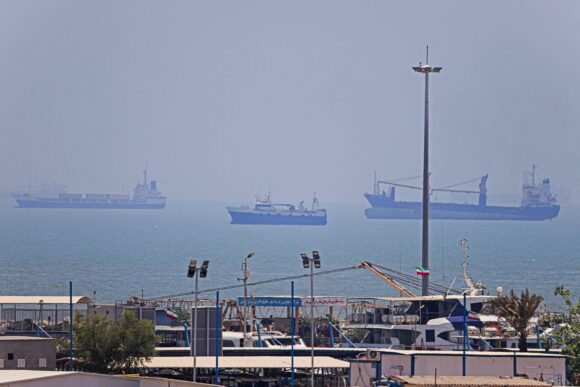
Photo credit: Vessels anchored in Bandar Abbas along the Strait of Hormuz on June 18, 2026; photo credit: Amirhossein Khorgooei/AFP/Getty Images
Was this article valuable?
Here are more articles you may enjoy.
 Hackers Breached Propulsion System of US-Bound Oil Tanker
  Zurich Insurance Completes Acquisition of Beazley, Names New Beazley CEO
  Large Commercial Property Rates Drop 14.5% in Q2 to Highlight Latest Willis Report
  AXA XL Launches Insurance Company, AXA XL E&S

