

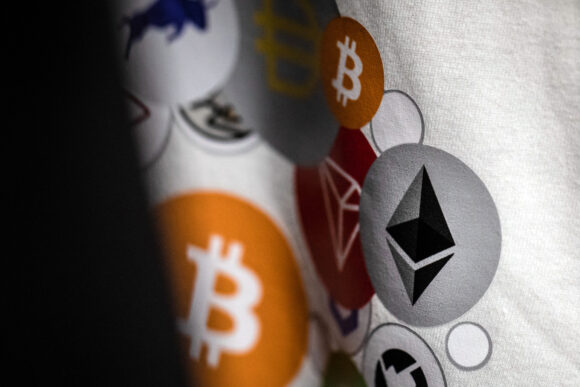
An initiative set up by some of crypto’s largest companies to curb illicit activity has quietly been dissolved, at a time when crime involving digital assets continues to surge.
The organization behind the Tron blockchain partnered with stablecoin issuer Tether and analytics firm TRM Labs to establish the T3 Financial Crime Unit in September 2024, pledging to create a “safer and more secure” crypto industry. A year later, digital assets exchange Binance joined its ranks and the group said it had frozen a total of $250 million in illicit assets globally, working alongside law enforcement agencies.
More recently, however, the alliance had broken down and was subsequently terminated, according to people familiar with the matter, who asked not to be identified because the decision to end T3 had not been made public. Over the past year, the initiative was stymied by slow response times and a lack of coordination among members, said one of the people. Another said T3 was disbanded in late August.
“While the very successful T3 program has concluded, Tron remains committed to working to help stop illicit activities on the blockchain, in partnership with law enforcement,” said a Tron DAO spokesperson. “More on our new initiative will be coming soon.” Tron was founded by crypto billionaire Justin Sun.
Tether will “continue to work with TRM to disrupt and interdict illicit funds,” a company spokesperson said, adding that the company has been participating in the Beacon Network, a real-time intelligence sharing initiative founded by TRM last year.
“T3 achieved extraordinary things,” said Ari Redbord, TRM’s global head of policy and government affairs. “Beacon Network builds on that work.”
Binance declined to comment.
The dismantling of T3 comes amid a series of major cryptocurrency thefts and an increase in funds received by illicit addresses. The surge was punctuated by last week’s record heist through which hackers drained $6.3 billion from Binance, the world’s biggest crypto exchange. Crypto firms have endured a string of breaches in recent months. Even hardware wallets — long considered the safest place to store cryptocurrency — have suffered exploits. Hackers stole more than $100 million in Bitcoin from wallets secured by Coinkite Inc. devices in August, and later drained millions from similar products made by Ledger.
Crypto crime more generally has soared within T3’s lifespan. In 2025, illicit addresses received at least $154 billion, a 162% increase on the previous year, according to a report by analytics firm Chainalysis. That was primarily driven by a 694% jump in the value taken in by sanctioned entities.
The sector has responded by ramping up fund-freezing efforts. Tether, issuer of the world’s biggest stablecoin USDT, has blacklisted a total of $5 billion to date, according to its website. Shortly after the Binance hack, Tether froze about $1.5 billion of USDT, contributing to an industry wide effort that immobilized about half of the loot.
That left the Binance hackers, who have been linked by the US Federal Bureau of Investigation to North Korea, with more than $3 billion to launder.
“Most of the laundering so far has run through Tron, although activity there has been quiet since around 05:00 UTC on 1 November,” Elliptic said in a statement earlier this week. Tron’s spokesperson did not immediately respond to a request for comment on the laundered funds.
Alongside Beacon, Tether is also working on an initiative called the Financial Access and Systemic Empowerment (FASE) Foundation, which was unveiled in October, the company spokesperson said.
Photo: Photo credit: Angel Garcia/Bloomberg
Was this article valuable?
Here are more articles you may enjoy.
 Georgia, Florida Insurers Facing New Scrutiny, Regulations After Election
 US Court Reinstates ‘Sunday Ticket’ Class Action Verdict Against NFL
 Father and Son Charged With Running ‘Chop-Shop,’ Selling Stolen Cars, Insurance Fraud
 Yellow Furball Mascot Liberty Biberty Sparks ‘Beautiful’ Protest. Seriously?


