

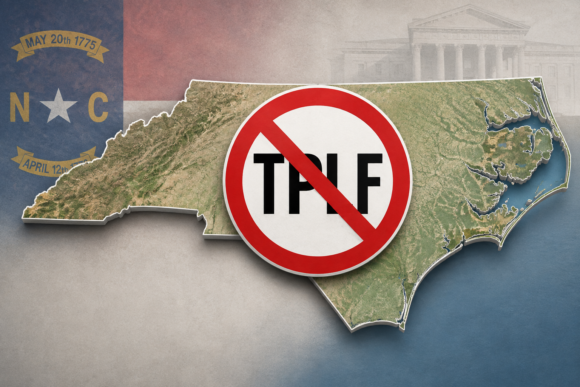
The decade-long war between the third-party litigation funding sector and the commercial insurance industry reached a turning point when North Carolina became the first state to ban commercial litigation funding on June 22.
While some legal and business publications framed the law as the start of a nationwide domino effect, that momentum has failed to materialize.
Instead, most states are choosing to build guardrails rather than insurmountable walls. Recent statutes target mandatory transparency, prohibit funder control over strategy and cap investor payouts. According to data compiled by the U.S. Chamber of Commerce, 20 states have enacted laws regulating the industry, including 13 states that passed restrictions within the last two years alone. None of these states sought an outright ban.
The stakes are high for both parties. The TPLF industry maintains that its investments give cash-poor companies the financial war chest needed to pursue justice against massive corporate adversaries. Conversely, insurance lobbies, the Chamber and corporate defense groups contend that litigation funding fuels runaway jury verdicts and settlements that drive up premiums for businesses and consumers alike.
Going into next year, the political battlefield will expand into heavily contested states like Texas and Florida, where each side is expected to spend substantial money to pass or block legislation. The strength of the plaintiffs’ trial bar in both states suggests that new bills will focus on regulating the TPLF industry rather than destroying it.
Nevertheless, even the remote possibility of strict prohibitions has spurred the TPLF sector to protect its investment pipelines. In response, funding firms have expanded beyond individual lawsuit financing toward institutional strategies involving private equity and management services organizations (MSOs)—independent management companies set up to handle a law firm’s back-office business infrastructure. By adding these corporate structures to their portfolios, litigation funders can back high-stakes cases through an indirect channel that is currently shielded from direct TPLF disclosure rules.
The maneuvers ensure the conflict will intensify through 2027. State legislators will be compelled to address questions over who controls legal strategy: retained counsel or outside investors. Foreign funding channeled through private equity will weigh heavily in these debates, as will strict mandatory disclosure rules designed to force unredacted funding agreements into the open.
“Our usual set of industry opponents—the U.S. Chamber of Commerce and its allies in the insurance, pharmaceutical and technology sectors—are using a state-by-state strategy,” said David Perla, Vice Chair at Burford Capital. “In some states, they push for full disclosure rules that allow them to engage in discovery sideshows that intentionally slow down litigation. In other states, they push for restrictions related to foreign funding. Wherever possible, they’re setting up roadblocks.”
State By State
Many states are advancing anti-TPLF bills because a comprehensive federal ban lacks bipartisan support. While insurance and corporate defense lobbies have rallied behind Representative Darrell Issa’s disclosure bills—the Litigation Transparency Act (HR 1109) and the Protecting TPLF From Abuse Act (HR 7015)—federal legislation has stalled. The gridlock persists because trial lawyers, conservative donor networks, and privacy advocates strongly resist broad TPLF disclosure mandates that they argue violate donor anonymity.
Consequently, the battleground has transitioned to the state level. In North Carolina, HB 315 (the Prohibit Litigation Investments Act) bars TPLF firms from financing civil cases for a contingent stake in the outcome. While the law energized funding opponents, no other state bills seek to replicate the ban, and none are expected to pass. This is because North Carolina is one of the few remaining states enforcing champerty—an old common-law rule prohibiting unrelated third parties from funding lawsuits in exchange for a share of the recovery. In short, litigation funding in North Carolina was already legally precarious.
“Could you fund litigation in North Carolina before the ban was enacted? Not really, because of champerty,” said Dai Wai Chin Feman, U.S. Chapter Chair at the International Legal Finance Association, a TPLF trade association. “Yet, people were commenting, ‘It’s an outright ban; that’s worrisome.’ My reaction was, there already was a ban.”
In fact, Feman argues the new statutory language backfired on corporate defense groups. “To the contrary, North Carolina’s ban only applies to the financing of legal fees, costs or expenses, not the provision of corporate working capital or claim monetization,” he noted. “What was previously a gray area due to champerty is now clearly permissible.”
By barring TPLF from advancing capital specifically to pay for lawsuit fees, the statute left the door open for funders to provide general working capital directly to law firms. Because of this carve-out, North Carolina was not a total defeat for the funding industry. Approximately 11 to 14 other states still enforce common-law champerty. While four of them—Alabama, Kentucky, Mississippi and Missouri—specifically target TPLF as unlawful, none are currently seeking outright statutory bans.
Nevertheless, corporate defense advocates view the legislation as a major symbolic win, a critical catalyst “sending a signal and a wakeup call to other states that this movement has gone beyond the education phase and is now in the solution phase,” said Stephen Waguespack, President of the U.S. Chamber of Commerce Institute for Legal Reform. “We secured a big victory.”
Waguespack points to the broader impact of HB 315 on the growing array of TPLF restrictions burgeoning across the nation. Thirteen states signed laws regulating TPLF over the past two years—with Tennessee, Utah, Mississippi, Ohio, New Hampshire and North Carolina all enacting statutes as HB 315 progressed in 2026.
“Having 20 states with restrictions sends a warning to the rest of the country: ‘You better step up and put restrictions in place, or funders will flow into your back door,'” Waguespack said. “We’re already hearing about and seeing that happen, with Florida, Missouri, Iowa, Michigan and Washington introducing TPLF legislation.”
Across these five states, anti-TPLF bills have made significant headway. The efforts primarily focus on mandating the immediate disclosure of outside funding to defense teams (Florida, Iowa, Michigan) and prohibiting foreign entities from backing local lawsuits (Florida, Missouri). Additionally, the proposed measures aim to establish strict regulatory guardrails, such as capping investor payout rates (Florida, Iowa, Washington) and explicitly banning funders from influencing legal strategy (Florida, Washington).
“Over the next year or two, we will see places like Texas, which is having a major legal reform movement, get serious about TPLF restrictions,” said Waguespack. “Furthermore, grassroots groups in Indiana and Alabama are putting their agendas together, and TPLF will be right at the top. Given this momentum and North Carolina taking such a strong stand, the days of being content with minor, watered-down provisions are officially over.”
Ups and Downs
Feman’s perspective on the legislative status quo focuses on TPLF wins, losses and compromises. Regarding compromises, he pointed specifically to Kansas and Utah, which implemented balanced regulations rather than total bans.
Under Kansas’s Senate Bill 54, lawmakers established a bipartisan middle ground on transparency by requiring plaintiffs to submit their funding contracts to a judge for a private, “in camera” review. This shields sensitive legal strategies from defense eyes while still disclosing baseline facts, like the funder’s identity, to the court.
Meanwhile, Utah’s compromise statute, HB 280, restricts funder behavior by banning referral kickbacks to attorneys or meddling in case control, while outlawing the entire practice of lawsuit financing tied to foreign adversaries like China or Russia. By codifying specific guardrails rather than implementing an outright ban, Utah satisfied the insurance and corporate lobby’s security concerns while preserving the right of domestic TPLF firms to operate.
As for wins, the TPLF side secured a major victory in New Hampshire by aggressively lobbying against House Bill 1384, successfully stripping out all broad domestic transparency rules, registration mandates and case-control restrictions sought by defense advocates. By pivoting the conversation toward national security, TPLF lobbyists convinced the State Senate to water down the legislation to exclusively ban lawsuit financing backed by foreign adversaries. The final law signed by Governor Kelly Ayotte leaves mainstream commercial litigation funding entirely unregulated.
Conversely, Feman acknowledged significant regulatory setbacks for the TPLF industry in Ohio and Tennessee. By enacting House Bill 105, Ohio became a pioneer in explicitly banning foreign-backed entities from financing lawsuits. The Ohio law also mandates registration for funders, requires strict disclosures and prohibits investors from controlling case strategies.
Tennessee went a step further, requiring the automatic disclosure of funding agreements to both the court and opposing counsel within 14 days of a lawsuit being filed. Additionally, the Tennessee statute eliminated funder influence by explicitly prohibiting third-party financiers from controlling legal strategy or settlement decisions while instituting a rigorous state registration process and a blanket ban on lawsuit financing tied to foreign adversaries.
As this patchwork quilt of regulations suggests, both sides are fighting over specific rights involving disclosure mandates, investor payout caps, joint liability for defense fees and case control. The latter is a crucial concern for insurer and corporate defense groups.
“We want a straightforward lookup form and strict prohibitions against funding agreements controlling a case. We don’t want a secret thumb on the scale when it comes to deciding a settlement,” said Waguespack. “When a case features a funder controlling the litigation, it creates a spiraling link to nuclear verdicts that ultimately creates massive [insurance] affordability issues.”
Some restrictions, like mandatory disclosures and bans on foreign funding, have been relatively easy to pass, while others have met stiff resistance. This is particularly true of attempts to require TPLF firms to provide unredacted funding contracts at the start of a lawsuit, a measure fiercely contested by trial lawyers who argue it exposes the plaintiff’s financial staying power and violates attorney-client privilege.
“It’s easy to agree on foreign reporting requirements and the mandatory disclosure of foreign interests,” said Robert Hartwig, Clinical Associate Professor of Finance, Risk Management, and Insurance at the University of South Carolina. “That’s something easy to sell in many jurisdictions and even at the federal level, as it has general bipartisan appeal. But there should also be mandatory disclosure of TPLF involvement in cases even when there is no foreign investment involved.”
But Perla, speaking on behalf of the funding industry, called the intense focus on foreign funding a “complete red herring.” He explained: “We permit foreign ownership of all sorts of critical assets in this country and think nothing of it. There’s absolutely no evidence of any foreign actor, nefarious or otherwise, obtaining sensitive data through litigation finance. In fact, we’ve provided evidence showing that foreign investors cannot access such information. Nevertheless, it makes for a catchy headline.”
A New Front Emerges
As traditional funding avenues face tightening regulations, a powerful new front is opening up. Litigation funders are moving away from individual lawsuits to forge deeper partnerships with private equity and private credit firms. Together, they utilize portfolio financing to bundle a law firm’s entire multi-case roster into a single investment pool. The diversification hedges risk and bypasses individual case restrictions. By tying capital to a broad portfolio, funders mitigate the danger of single-case failures while providing law firms with flexible working capital that is only repaid if the cases win.
For example, Bloomberg News reported that litigation funder Omni Bridgeway partnered with investment giant Ares Management on a multimillion-dollar transaction. Rather than betting on isolated lawsuits, the deal packaged a diversified portfolio of intellectual property, arbitration and contract disputes across multiple global jurisdictions. This structure allowed the investors to back a broad pool of legal assets rather than taking on the risk of individual case outcomes.
Simultaneously, litigation funding firms are expanding directly into the MSO market—a business model traditionally dominated by private equity. By purchasing or building MSOs, funders can legally manage a law firm’s back-office infrastructure and operational logistics.
This corporate structure offers a legal mechanism to permanently inject capital into a plaintiff firm’s business structure, leveling the playing field against deeper-pocketed opponents. Because this institutional money is tied to business operations rather than individual lawsuits, it creates a permanent capital pipeline that state regulators will find significantly harder to restrict or ban. An example is industry giant Burford Capital’s recent acquisition of a strategic minority stake in Kindleworth, an MSO that manages corporate operations for entrepreneurial law firms. This move positions Burford to capitalize directly on law firm growth, safeguarding its investments even as state courtroom restrictions mount.
“Investments in an MSO do not violate the actual letter of the law,” Hartwig explained. “Through investments in MSOs, it will be legally impossible for courts to disentangle investment influence from everyday law firm operations. Since you cannot technically ban the private equity investment itself, how do you demonstrate that their influence is undue or improper? That would be an enormous legal challenge.”
This article appeared in Insurance Journal’s sister publication, Carrier Management. A longer version of the article can be accessed there.
Topics Numbers
Was this article valuable?
Here are more articles you may enjoy.
 AI’s Water Strain Includes Surging Demand From Electricity Use
  KCC Says Isaias Insured Losses to Be $3 Billion; AM Best Calls Storm an Earnings Event
  ‘Unusual’ Isaias Brings Winds, Downed Trees But Fewer Claims Than Expected
  Florida Supreme Court Approves Board Certification in Insurance Law

