

The Atlantic has been pretty quiet so far this season, but one system east of Bermuda could soon develop into a tropical storm, the National Hurricane Center said Thursday.
If the storm were to develop into a Category 5 hurricane that strikes heavily populated cities like Miami or Tampa Bay, the insured losses could top $300 billion—more than any previous insured-loss event, Swiss Re said in a report released this week.
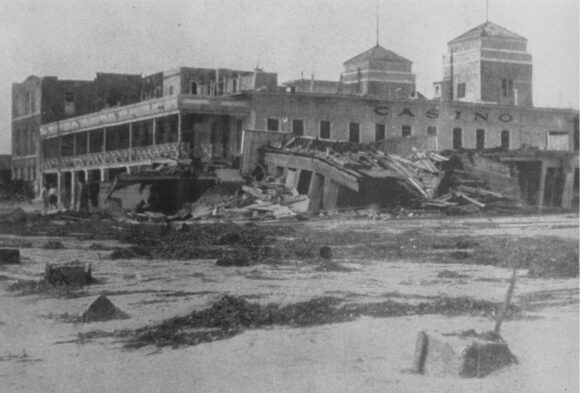
The Zurich-based reinsurer pointed out that one of the most damaging storms to hit Florida came a century ago, in 1926, and became known as the Great Miami Hurricane. A Category 4 storm of similar strength and size today would cause about $200 billion in insured losses.
By comparison, Hurricane Ian, which struck western Florida in 2022 as a Category 4, caused about $63 billion in insured losses, Karen Clark & Co. and other firms have calculated.
“One hundred years after the Great Miami Hurricane, the question is not simply how powerful the next major hurricane will be, but what it will encounter when it reaches shore,” Balz Grollimund, head of catastrophe perils at Swiss Re said in the report this week. “That lesson extends well beyond Florida: As populations and asset values increase in areas exposed to natural catastrophes, so does the potential for large insured losses.”
And 34 years after Hurricane Andrew made landfall near Miami and changed building codes and construction practices in the state, a similar storm would produce almost $100 billion in insured losses, Swiss Re estimated. Andrew caused an estimated $25 billion in insured losses, in today’s dollars.
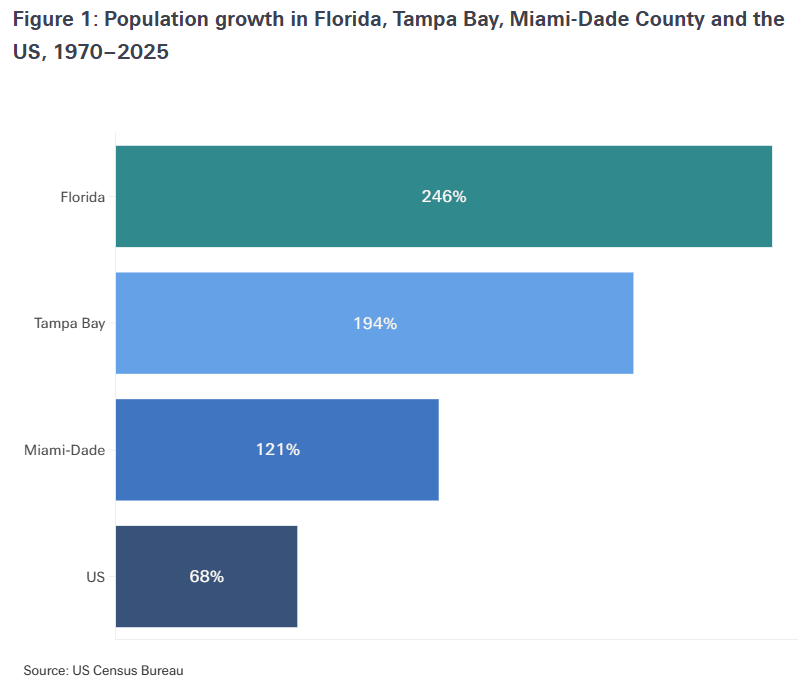
The increase in estimated loss costs is due not only to inflation over the decades, but also from a population explosion in Florida and widespread and high-end property development.
“A century of population and property growth has transformed the potential impact of a hurricane striking Miami-Dade County,” the Swiss Re report noted. “Just over 100,000 residents lived there when the Great Miami Hurricane arrived in 1926, compared with around 2.8 million in Miami-Dade today.”
More than two million homes in the Miami metropolitan area, with a combined reconstruction cost exceeding $600 billion, are now at moderate or greater risk of hurricane wind damage, the reinsurer explained.
But Florida property insurance carriers may also be better prepared for a monster storm that may land on a big city today, at least by some measures, the firm noted. Traditional and alternative reinsurance capacity can be more effective when supported by catastrophe modeling, disciplined accumulation management and effective mitigation, the report said.
“Growth in both traditional and alternative reinsurance capital may help keep pace with rising natural catastrophe risks. US wind is the dominant risk in the USD 60 billion cat-bond market and Florida tail risk capacity in reinsurance and retrocession markets relies heavily on the additional alternative capacity,” the report noted.
As exposures continue to accumulate, maintaining sufficient risk-transfer capacity must go hand in hand with robust modeling, disciplined accumulation management and effective mitigation.
Stronger building codes and wind-resistant construction can help reduce hurricane losses. Updated standards helped newer homes in Florida withstand Hurricane Ian, while replaced and storm-proofed roofs have further reduced vulnerability, the Swiss Re authors wrote. The authors are
Top photo: The wreckage of a Miami casino after the 1926 hurricane. (National Weather Service)
Topics Catastrophe Natural Disasters Profit Loss Windstorm Hurricane
Was this article valuable?
Here are more articles you may enjoy.
 Industry Reacts to Senators’ Letter for Claims Data and Recent Reports
  Gulf Coast on Alert for First Hurricane of 2026
  Luxury Car Rental Company Owner Staged Crash for Insurance
  Large Commercial Property Rates Drop 14.5% in Q2 to Highlight Latest Willis Report

