
Construction insurance brokers say the current market is a good time to build stronger relationships with insureds because attention does not have to be so focused on pricing but can instead be more on the complex risks in the business. By reviewing the risks, brokers can arrive at a deeper understanding of their insureds’ approach to risk and be in a better position to structure a program tailored to their risk tolerance when the market turns.
Construction risks are complex, and knowing how to manage these risks is critical when helping contractors build the right program structure, specialists say.
Labor shortages, added cost pressures, and supply chain concerns have been around the construction sector for many years. However, according to Song Kim, president of Global Commercial Industry Segments at CNA, what is important is to get insureds to understand that these pressures aren’t happening in isolation. Combined, they bring risk exposures that may not be discovered for years, he said.
The biggest challenge for underwriters today isn’t one single trend, he said. “It’s really understanding the compounding effect of all of these trends simultaneously.” These challenges all have a dependency on each other. “They’re interconnected risks,” Kim said. They could impact not only the construction insurance industry but also the success of construction projects now and in the future. “And that’s something that the underwriting community is watching closely.”
Kim believes that this “interconnectedness” of industry challenges is continuing to build pressure on contractors and their risk profiles. It’s something he feels that people don’t always have an appreciation for when it comes to insuring construction today. “But they fundamentally change the risk and how we, as underwriters, look at risk.” So, rising costs in the global economy, supply chain pain points, and a shortage of skilled labor all will ultimately impact severity, he said. “We don’t know when it’s going to show up, but we know that there is a strong correlation.”
The construction industry is resilient even in an uncertain macro-economic environment like today, Ryan Powers, senior vice president, head of construction at QBE North America, told Insurance Journal. “Project starts are slowing, driven by a scarcity of talent and inflationary pressure,” he said. And that lack of skilled talent is a huge barrier for some firms and a contributor to added risk.
According to the Associated General Contractors of America, 80% of member firms reported that at least one construction project had to be cancelled, scaled back, or postponed due to a shortage of labor with more than 90% of firms stating they continue to find it difficult to hire qualified labor.
New employees drive heightened exposure on a construction job site, Powers noted. “As skilled labor becomes more scarce, less tenured employees become more common, which in turn drives higher severity and frequency of loss.”
These trends and the added risk they bring “will define the next phase of the construction insurance market,” Kim said, as a “transformation from underwriting an individual single risk to underwriting around ecosystems” takes place. This is necessary to help underwriters in “truly understanding the value chain, how projects are designed, how they’re built, and ultimately how they perform when they become operational.”
Preparation and specialization are crucial for what’s to come, he said. “Whenever you have that deep specialization, there’s always going to be opportunity,” he added. “We’re seeing significant growth in areas like digital infrastructure, large-scale industrial projects. They’re creating significant demand for insurance, but more importantly, they’re elevating the role of insurance from a business transaction to one of a strategic partner that offers not just product but true risk insights,” he said.
Jake Schmitz, Holmes Murphy’s client executive for the construction sector, said that now is a great time to review program structures with construction clients. He plans to “double down” on conversations with insureds around their program structure, risk tolerance, and overall risk strategy in this newer soft market cycle. This provides agents and brokers an opportunity to foster strong client relationships by doing what’s best for them, he said. This is the first time in a long time where “you can have your cake and you can eat it, too,” he said.
Current Trends
For the 12 months ending April 2026, total construction starts were up 8.1%, according to the Dodge Construction Network. While residential starts were down 4.4%, nonresidential starts were up 10.0%, and nonbuilding, which includes public works and other infrastructure, was up 19.5%.
Construction in digital infrastructure, energy, and other large-scale infrastructure projects are leading the way. Specialists see some growth in other areas of construction as well, but the best opportunities for construction specialists come from a more competitive insurance market.
Despite the challenges of interconnected risks, contractors and their insurance specialists are finding a better insurance market, at least for top-tier accounts. Some specialists might even refer to today’s market as having “turned the corner” into soft market territory.
“There’s great opportunity for construction risk managers in this current insurance environment to capitalize on the softening market,” said Schmitz. He said the second half of 2026 is showing signs of a more competitive market cycle and is a great time to negotiate not only better rates but also better coverage terms for his construction clients. “I think that is absolutely the critical part,” he said.
Trusted carrier partners are now more willing and ready to do what they need to do from a premium and, even more importantly, from a terms and conditions standpoint, to retain the business and keep partnerships strong, Schmitz said. It depends on each broker’s approach to the market and what their clients are comfortable with, but this year brought an insurance market more willing to make positive coverage changes that impact a contractor’s cash flow and profitability, he added.
Those changes might mean different deductible structures, changes to policy limits and rate, Schmitz said. “But I would say buyer beware because not all policies are created equal.”
“Factors like labor shortages and project-related costs have a negligible impact on insurance programs in the eyes of most carriers,” he added. Some might have more concerns than others, but when it comes to the top construction insurance carriers in the market, there’s high capacity for contractors that put into place the right risk management controls, according to Schmitz.
Darren Tasker, head of construction for the Americas, Allianz, agrees. “I would say Q2 this year we’ve noticed a real acceleration of the market to be more competitive, [with] more capacity,” he said.
Part of what’s driving the trend is the rapid softening of the property market. “The property market has really fallen off a cliff, so revenues are down on that front, so I think a lot of carriers holistically are saying, ‘OK, we can offset some of that lost income or revenue from the property side by making that up on the construction side, which creates a hyper competitive environment compared to what it was a year ago.”
Tougher E&S Risks
There will always be areas in construction that are more challenging to insure such as heavy fleet risks, habitational, and heavy construction, said David Gross, managing director, broker, casualty, at Burns & Wilcox.
“So, [for] the good contractors with good loss history, no matter what the size, the market’s changing. It’s getting softer, but not terribly,” Gross said. “A lot of the stuff we’re seeing right now is flat unless there’s a huge auto fleet which really drives rate.”
Gross said that even in the difficult habitational market, things are changing. “Now, in habitational risks it’s the terms and conditions that are driving change,” he added. “The price got to where the price is going to be over the last couple of years when the market was hard, but now terms and conditions are the focus.” Difficult habitational risks with heavy claims history might find an E&S market adding exclusions on bathrooms or even sidewalks, he said.
And while commercial auto rates tend to be trending down slightly, that’s not always the case in construction, he said. Heavy constructions trucks can be tough. “Anything wheels related, excess truck or just primary auto, that’s tough.”
Gross advises retailers to know their broker and their capabilities. “It’s not just a wholesaler,” he said. “What matters is the quality of the broker.” He warns there are high-quality brokers in almost every wholesale organization, but there also may be some that are just mediocre or less. “It’s very rare to find somebody who services the account to death and knows the marketplace like the back of their hand,” he said. “We’re coverage brokers, we understand the coverage, we understand policy wording, and we know what a contractor needs.”
Sectors Driving Growth
Three sectors are driving the bulk of global construction demand. Digital infrastructure, power infrastructure, and other critical infrastructure assets are the main engines of construction growth worldwide, according to Aon’s 2026 Global Construction Insurance and Surety Market Report, released in May. Demand across each of these sectors is expected to remain strong, driven by the energy transition, the expansion of the digital economy, and the need to modernize and climate proof aging infrastructure assets, the report said.
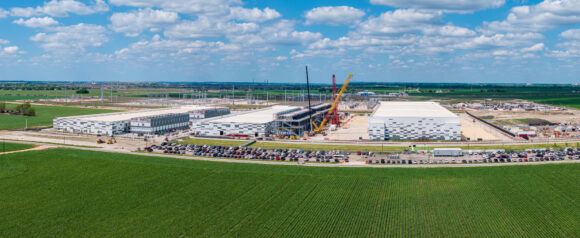
Data center construction is booming. Spending on data center construction has tripled over the last three years, and project developments are expected to continue growing in both numbers of centers built and in value. The Aon report noted that data center projects are multiple times larger than they were even a couple of years ago. The expansion in size is leading to significant increases in power requirements as well.
“Everybody’s looking to build data centers and looking to build them quickly,” said Edward Sheifflele, executive vice president at Berkley Construction Professional.
Globally, the data center demand has led to opportunities in new hotspots like Richmond, Virginia (North America), Santiago (Latin America), and Mumbai (Asia-Pacific), according to a report by Allianz’ last year, The Data Center Construction Boom.
While there are no clear signs that the growth in data centers has reached a peak, there could be challenges ahead that impact the industry’s upward trajectory, according to Allianz’s Tasker.
“Future demand for AI is difficult to gauge, due to rapid technological advances and various barriers to widescale roll-out. This has led some commentators to voice fears about a bubble, over-investment, and the prospect of stranded assets,” he said in the report.
Even so, Tasker said that Allianz has seen a significant increase in the number of submissions for data centers in recent years.
Construction costs for data centers used to be in the range of $200 million to $300 million but now can cost as much as $20 billion or more, Allianz reported. The size of some larger data centers has pushed construction into more remote areas as well. That is leading to risk challenges because these remote regions may not have the infrastructure to support their activities, such as sufficient grid capacity and transportation, according to the Allianz report. Also, in remote locations data centers can be exposed to added natural catastrophe risk, particularly in U.S. regions experiencing heightened storm frequency and severe weather events, the Allianz report said.
“Typically, these large construction projects require project-specific policies given their size, and the main reason for that is an insurer who is insuring these large projects wants to ensure that all of the parties on-site have adequate coverage,” Tasker said. “Project-specific policies can include casualty coverage, like wrap-up liability exposures and workers’ compensation, plus professional liability for engineers and other professionals. On the property side, builder’s risk covers the property while it is under construction, and project cargo covers the transportation of equipment.”
Data center construction might also include power and water treatment plants needed to fuel and operations, which is another area of growth, Tasker said. But outside of data centers, energy overall is also on an upward trend, he added.
“Conventional power, more talk around a nuclear power renaissance, and then certainly the renewable energy sector as well” are growth areas for Allianz construction, Tasker said.
So, is the construction sector still booming?
“I would still say it’s a boom,” Tasker replied. “We’re still seeing a lot of activity, a lot of submissions. We’re still seeing our contractor clients with a significant backlog of contracts. It’s just not as diversified as it was in prior years,” he said.
Topics Trends Construction
Was this article valuable?
Here are more articles you may enjoy.
 Chubb Q3 Net Income Down Slightly on More Catastrophe Losses
  KCC Says Isaias Insured Losses to Be $3 Billion; AM Best Calls Storm an Earnings Event
  Reuters: DXC in Advanced Talks to Sell Insurance Software Unit for $2.4 Billion
  EU Cyber Agency Warns Websites May Go Dark as PHP Prepares Critical Fix
From This Issue