

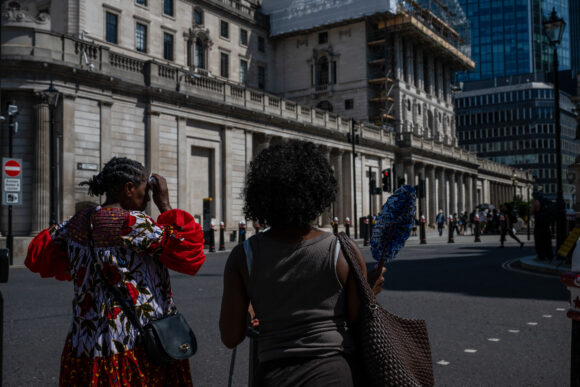
London’s efforts to deal with rising temperatures come at a considerable financial cost that will require the city to turn to private investors for help, the mayor of the UK capital said.
“This is an environmental crisis, but also it’s an economic crisis, a public health crisis, and a social justice crisis,” London Mayor Sadiq Khan said in an interview on Thursday. “The costs of inaction outweigh the cost of action, but also we recognize we can’t do this by ourselves from City Hall.”
It’s already clear that even short bursts of high temperatures can leave a major dent in the city’s finances. Heat waves in 2022 — the year Londoners first experienced 40C — cost £1.5 billion ($2 billion), the Mayor’s office said in a report. Around 1 million London homes are at high risk of overheating, it said, and it would cost somewhere between £9 billion and £45 billion to make the most vulnerable homes more resilient.
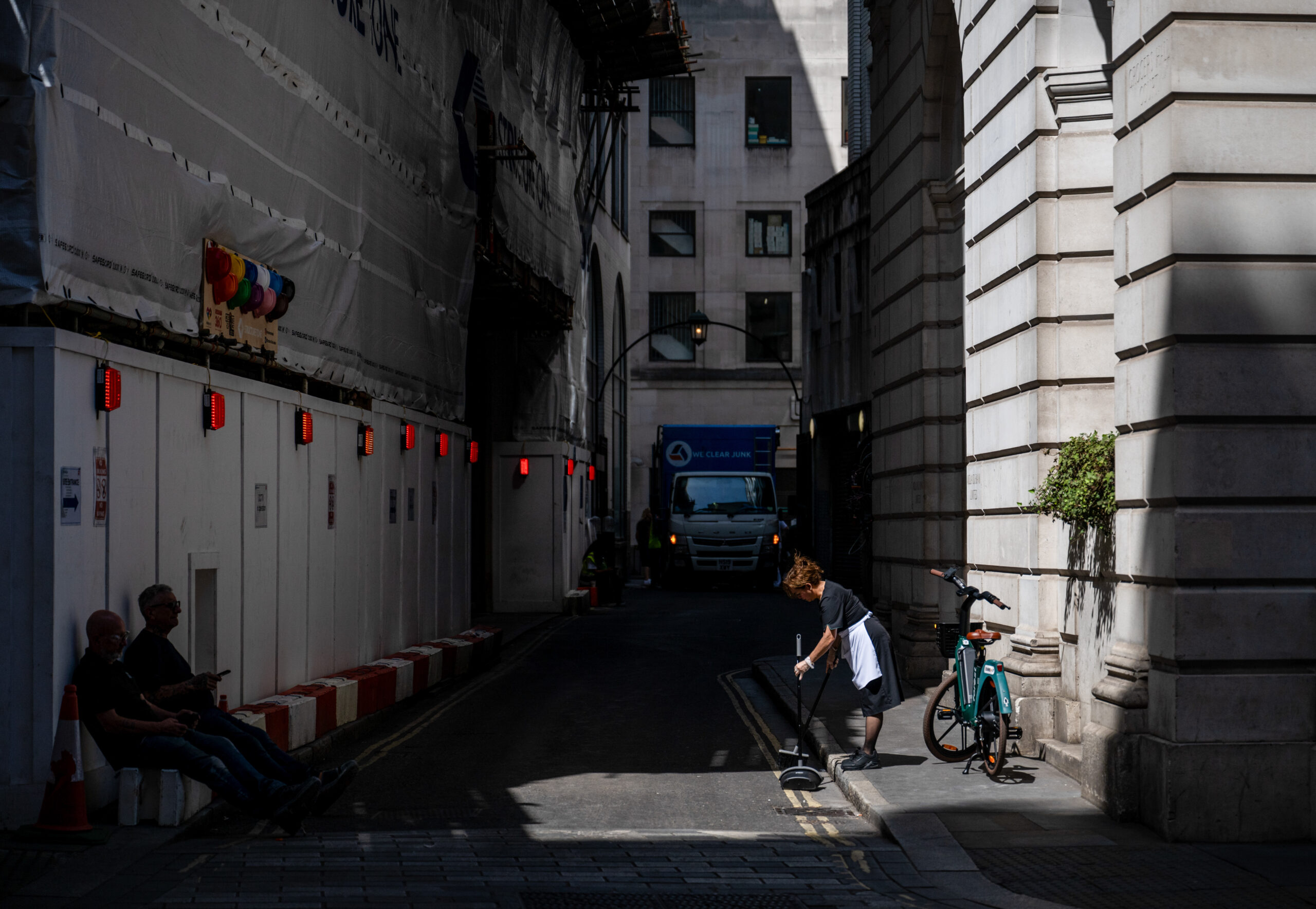
Given the costs ahead, the city of London will require private investment to help it pay for all the upgrades needed to deal with heat in the years to come, according to Thursday’s report.
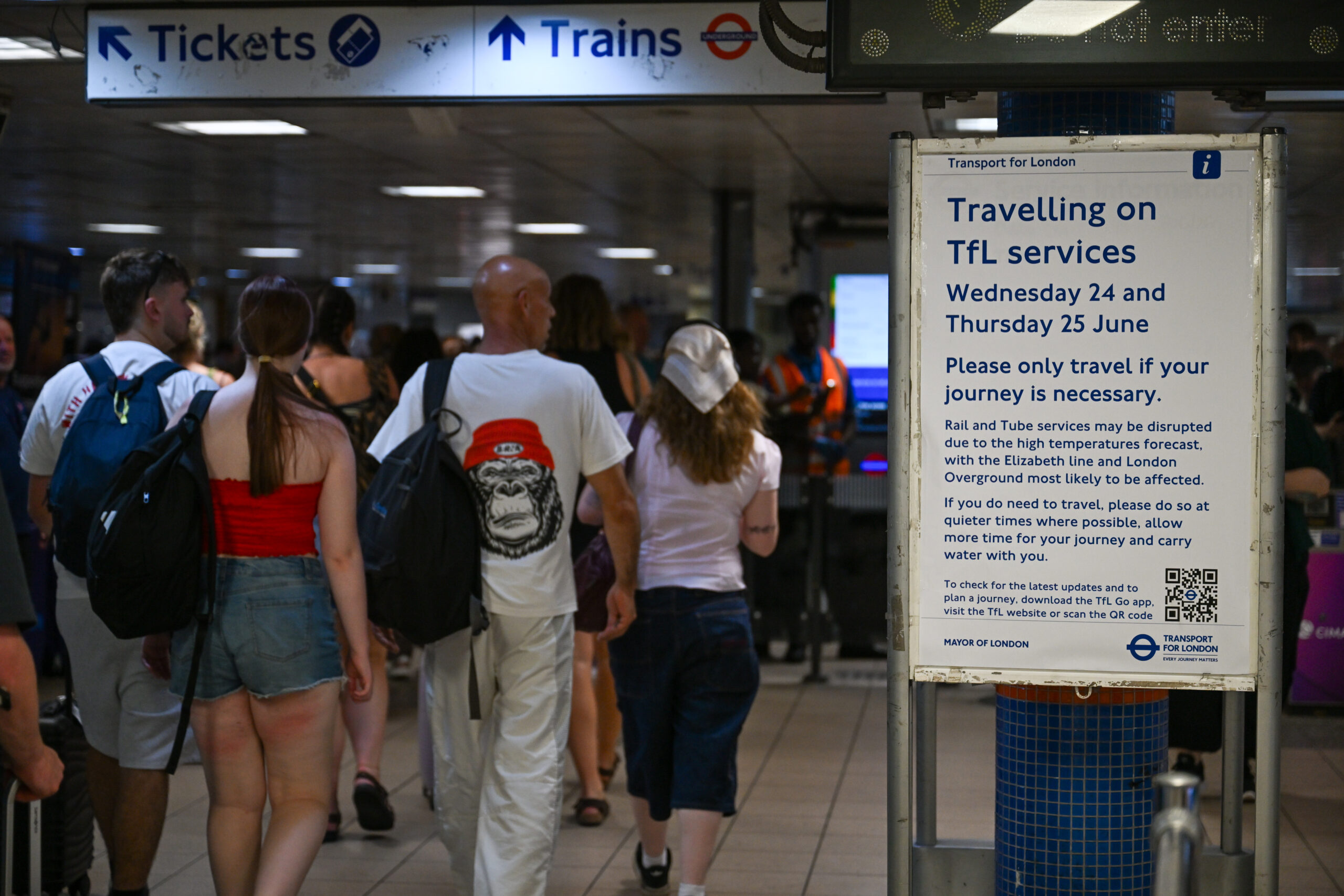
The assessment comes as attendees at London Climate Action Week have struggled to stay cool during panels and events intended to address global warming. Temperatures this week have hovered around 35C (95F), rendering conditions in parts of London unbearably hot.
Many LCAW attendees posted on social media that they were staying home due to the heat. Some events, including a meeting about extreme heat due to be held at the London School of Economics, were canceled. The charity Greenpeace said it had recorded temperatures of more than 55C on central London pavements and transit platforms.
The London Ambulance Service registered a record number of calls for life-threatening emergencies on Wednesday because of the heat. Emergencies including faintness, shortness of breath and heart issues were also all higher than usual, and overall there were 642 “Category 1” calls – the highest number ever, it said.
The Mayor of London’s report marks the first time the city has set out a plan for dealing with extreme heat in the age of climate change. It details the threats Londoners face from poorly-adapted homes, transport systems, offices and public spaces.
Priorities include adding shutters to high-risk homes and shade to public spaces, planting more trees, expanding access to swimming, and lowering temperatures in schools.
Though the Mayor’s office said external shading should be prioritized to stop buildings from overheating, it also conceded that air conditioning will be needed “for vulnerable settings such as health and care.” AC units may also be needed to achieve safe and comfortable temperatures in other settings, it said.
The Mayor’s office has previously voiced skepticism toward air conditioning due to the energy required to run units, and the risk of creating urban heat islands, as hot air is sucked out of buildings and transferred onto city streets.
Elsewhere in Europe, efforts to deal with extreme heat are also dominating headlines. In Switzerland, where temperatures are rising more than twice as fast as the global average according to the Swiss Academy of Sciences, concerns were raised about the insurance implications.
“Heat can act as a risk amplifier affecting health, agriculture, water, energy and infrastructure while increasing the potential for natural hazards such as floods,” Swiss Re Institute said on Thursday.
“Switzerland has built strong resilience to floods, storms and other natural hazards,” it said. But “extreme heat is putting that resilience to the test.”
Linda Freiner, chief sustainability officer at Zurich Insurance Group, said that “by putting a price on resilience, we are providing a risk signal of the rising cost of inaction. “When we don’t invest in adaptation and resilience, and the reality is, of course, that inaction doesn’t save money, we are just pushing the problem forward into the future at a much, much higher cost.”
Climate change is “evolving faster than our adaptation and transformation of our houses and livelihoods, because they were not built for these temperatures,” said Éléonore Caroit, minister delegate for francophonie, international partnerships and French nationals abroad.
It’s now necessary “to educate people from the northern countries to customs that they don’t have, because they were not used to those temperatures,” she said.
Top photograph: Visitors attempt to keep cool opposite the Bank of England during a heat wave in the City of London, on June 24, 2026; photo credit: Chris J. Ratcliffe/Bloomberg
Related:
Topics London
Was this article valuable?
Here are more articles you may enjoy.
 Chubb CEO Greenberg: Industry Has to ‘Put Arms Around’ AI Liability
  Former Trident Reciprocal CEO Ordered to Pay $468K in Attorney and Arbitrator Fees
  EU Cyber Agency Warns Websites May Go Dark as PHP Prepares Critical Fix
  Storm Austen Will Be Stronger Than Forecast Along UK Coasts

