

Last week, as temperatures in Europe soared and France recorded its highest-ever average temperature, Bloomberg conducted a poll of its clients — including traders, portfolio managers and strategists. The question was simple, but important: Is it ever appropriate to wear shorts to work?
Only 45% said yes, which is, frankly, more than I expected.
The resistance to shorts in formal offices is powerful, rooted in centuries of traditions and a sense of decorum that stretches across oceans. But temperatures have been steadily rising in recent years, with Europe — where most buildings and schools have noair conditioning — warming faster than any other continent.
Read more: Nearly All of Europe Had Above-Average Heat Last Year, as Climate Records Toppled
Is it not time for a change? If it’s over 90 degrees Fahrenheit (32 Celsius), shouldn’t we be allowed to wear shorts to the office? Life’s too short to be so uncomfortable.
Many readers will disagree. Our poll respondents said shorts were “unprofessional,” “too casual,” and “not for finance.” “We must hold the line on decorum and propriety,” wrote one. “AI is taking all our humanity, all we have left is pants.”
But whether you like it or not, the cutoffs are coming. In Japan, a formal culture if there ever was one, Tokyo governor Yuriko Koike in April declared that male municipal workers were allowed to wear shorts to work, and urged businesses across the capital to adopt similar relaxed dress codes. It was part of an initiative called “Tokyo Cool Biz,” designed to help employees feel more comfortable while reducing air conditioning strain on the electrical grid.
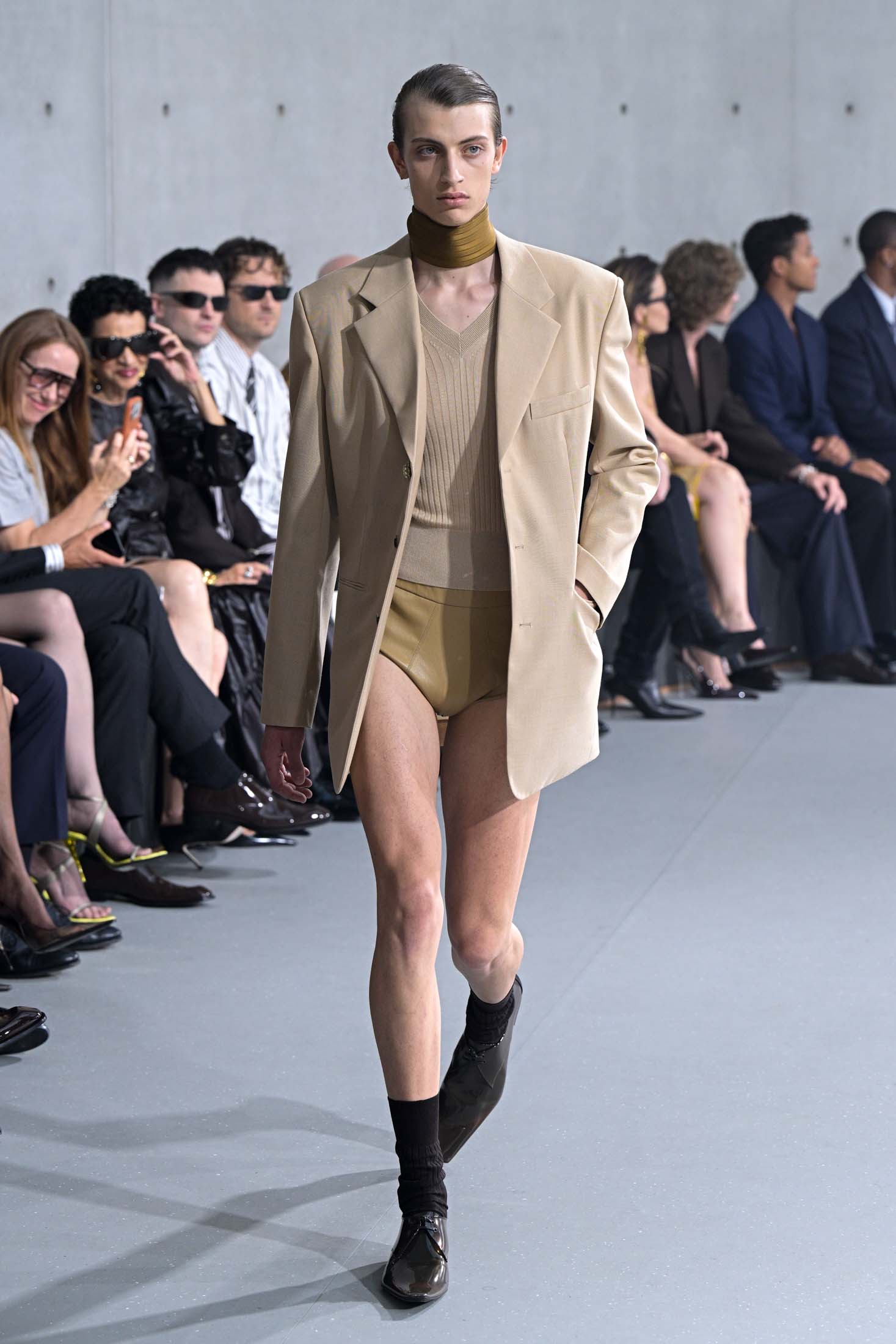
At Milan’s June menswear shows, models from Ralph Lauren, Thom Browne, Louis Vuitton, Yves Saint Laurent, and Dior stomped down the runway in legs bared to the knee, styled with blazers and even ties. Runway stylings are an inspiration — and in this case, a guidepost for how we can one day look elegant while still feeling comfortable. In weather like this, these forward-thinking designers were telling us, it’s business on the top, survival on the bottom.
Across London, where air conditioning is scant to absent and a Tube commute can be boiling, men and women dared to don the look as temperatures reached 36°C on Wednesday. In fact, “wearing shorts to work has become far more common and widely accepted in recent years,” says Daisy Knatchbull, founder and CEO of the women’s tailoring shop Knatchbull on London’s historic Savile Row. “Tailored shorts have naturally become a smart and chic option for the office, particularly during summer months.”
Of course, at tech companies, small businesses and other low-key offices around the world, comfortable attire including shorts, T-shirts and even sandals have long been accepted. Even in fields like finance, insurance and law, engineers and tech employees are often already allowed to wear shorts, wandering calf-naked among salespeople and executives in suits or business casual attire.
Origins of Shorts Resistance
For centuries, plain clothing designed for a body that moves through a challenging world was a symbol of the lower class. Restrictive, impractical, more expensive attire showed a mind far above those concerns.
“Practical dress allowed wearers to conduct their daily business, whereas constricting or cumbersome corsets and undergarments … delicate shirt cuffs and heavy wigs were clear visual signs that the wearer wasn’t responsible for — or even capable of — manual labor,” writes costume designer and scholar Chloe Chapin in her new book, Suitable: The Sartorial Revolution and the Fashioning of Modern Men. Dressing up, in other words, meant you were a more valuable person.
What we think of as office attire around the world spread from America, evolving in the early 19th century into roughly what we now know it to be, Chapin writes. By the industrial revolution, when tailoring (and office jobs) became much more widely available, covering up the body with a suit became a core tenet of masculinity. “Suits were a sort of armor that attempted to both hide and correct the natural body,” Chapin writes.
But it wasn’t always so. Before the 19th century in the West, displaying the body was central to displaying masculinity. Specifically, showing some leg.
“While fashionable Western women had hidden their legs under long skirts for over a thousand years, men had bared their legs in a show of manliness that befit a cultural glorification of warriors and elegant aristocrats appreciated for their muscular athleticism, regal poise, and shapely figures,” Chapin explains. In 18th century courts, where bowing and dancing was so important, it was crucial to show off one’s shapely calves — through breeches down to the knee and snug, revealing stockings below.
Even America’s founding fathers initially wore breeches before they turned to simpler attire as a rejection of European courtly life.
Pants as Sign of Respect
The UK tradition of short pants being reserved for children really began when Lord Robert Baden-Powell founded the Boy Scouts Association in 1910 and established them as the outdoorsy uniform. This became the standard dress of the proper English boy, and the idea spread across Europe in the ensuing decades.
Like so many fashions, the exposing of the leg has historically had little to do with appearance, and everything to do with perception. Talk to office workers, bosses, fashion types, lawyers, bankers, doctors, waiters, and the unifying consensus is that shorts are not appropriate when presenting yourself to another person. In offices where shorts might be acceptable, they are verboten when meeting with senior leadership or clients.
At the global law firm Herbert Smith Freehills Kramer, partner Richard Farley, 59, explains that a lawyer’s attire must convey to clients “that we take their matters very seriously, that we pay attention to detail, we like to be professional and we are serious people.” Dress is not frivolous, he explains to me — and points to the rise of casual Fridays in the 1990s as a start of a slide in decorum where “we became confused that the workplace dress ought to be for our comfort rather than to convey our values to our clients.”
Farley, who often wears a three-piece suit to work, offers these rules for making a good impression: “a properly fitting, well-made suit of a high-quality fabric appropriate for the season; a dress shirt; and, preferably, a tie.” Shoes, he adds, “have become appalling. They should be leather, brown or black, or, on occasion, suede. Avoid at all costs the ‘sneaker shoes’ that so often look preposterous. And no backpacks for anyone not an intern.”
Farley concedes he represents the formal end of the spectrum. Many firms that long required suits loosened those requirements around the pandemic. But the idea of pants as a sign of respect spreads far beyond those who show up to traditional offices.
“When I was an intern at Women’s Wear Daily in Paris as an 18-year-old, in my exit interview I was told by my editor that it was inappropriate for me to wear shorts to work. It was sweltering in Paris,” recalls Josh Greene, an AD100 interior designer. That lesson stuck with him. “Even as a creative professional with my own company, I pause before ever wearing shorts to the office.”
Robert Khederian, a real estate broker in Manhattan who spends much of his workdays trekking through a city that can be excruciatingly hot in the summer, has also sworn off shorts. “I have conducted showings in shorts and I have always regretted it,” he says. “My clients are touring multimillion dollar properties and I’m in shorts? Inappropriate. I once showed up to a walkthrough in shorts and got called out by another broker. They had a point!”
Is change upon us?
With the rise of athleisure in the mid-2010s, we began to incorporate office clothing that also recognizes our bodies’ needs. Lululemon, Athleta, Rhone — they do a huge business on work pants and shirts made with technical fabrics that breathe, stretch and comfortably accommodate movement. Since the pandemic, probably half the midtown Manhattan workers who used to wear suits now wear Lululemon trousers that, feasibly, they could also jog in. Working from home proved you can be comfortable and perform your tasks perfectly well.
There’s also popular GORPcore, a term coined by The Cut in 2017 for the rise of functional, utilitarian outdoor gear peddled by companies like Patagonia and REI but worn in urban and workplace situations. Even Rick Owens, the fashion-forward designer famous for his drop-crotch pants, has started offering more polite “Work Shorts.”
Surely these signs mean that we’re ready? As temperatures climbed uncomfortably this month, I asked Ken Ohashi, the CEO of Brooks Brothers, which offers dozens of well-tailored short options in everything from linen to corduroy to madras, whether the garments were OK to wear to work.
“Hard no,” says Ohashi, 51. “Society just hasn’t caught up to the fact that that’s okay. As a company we need to dress the way we want our stores to dress.”
Next I turned to Derek Blasberg, the 44-year-old Harper’s Bazaar and Vanity Fair correspondent and Substack diarist who has attended thousands of fashion shows. Surely he has a more forward-looking view. “I’d never wear shorts to the office,” he says. “But then, I rarely go to an office, so what do I know?”
Matthew McNeill, 39, a prominent New York gastroenterologist who performs hundreds of colonoscopies a year, flipped the question back at me: “How would you feel if your doctor had on shorts?”
I even asked activist investor Bill Ackman, the founder of Pershing Square Capital Management, who as an activist investor was one of the world’s most famous short-sellers. Surely he sees the value in them? Says Ackman, age 60: “I gave up shorts for a reason.”
Of course, these folks aren’t alone. Shorts are frowned upon, or outright banned, in offices all around the world — even where it’s regularly quite hot, like Mexico City, Dubai, Kuala Lumpur, Mumbai and Buenos Aires. In many of those places, workers favor loose-fitting clothes made from natural fabrics like linen and cotton.
Think of Norway
Scandinavia is one of the few regions that’s more flexible on shorts at work. As my quest for shorts validation was clearly failing, I called Jørgen Amundsen, the 49-year-old founder of the Oslo-based Amundsen Sports — a premium outdoor clothing outfitter that’s expanding in the US. Amundsen’s clothes are rugged and colorful: Think tough corduroy shorts in bright oranges and blues, and rough-and-tumble oxfords in gingham and safari linen.
They even make knickerbockers, short pants that cinch at the knee; John Adams would be proud. It’s clothing designed for hiking, fishing and other rural pursuits — but their biggest storefront in America is in New York City.
“Of course we sell in mountain and coastal destinations, but our customers are people living in cities,” Amundsen says. “They have normal urban lives, and then they adventure.”
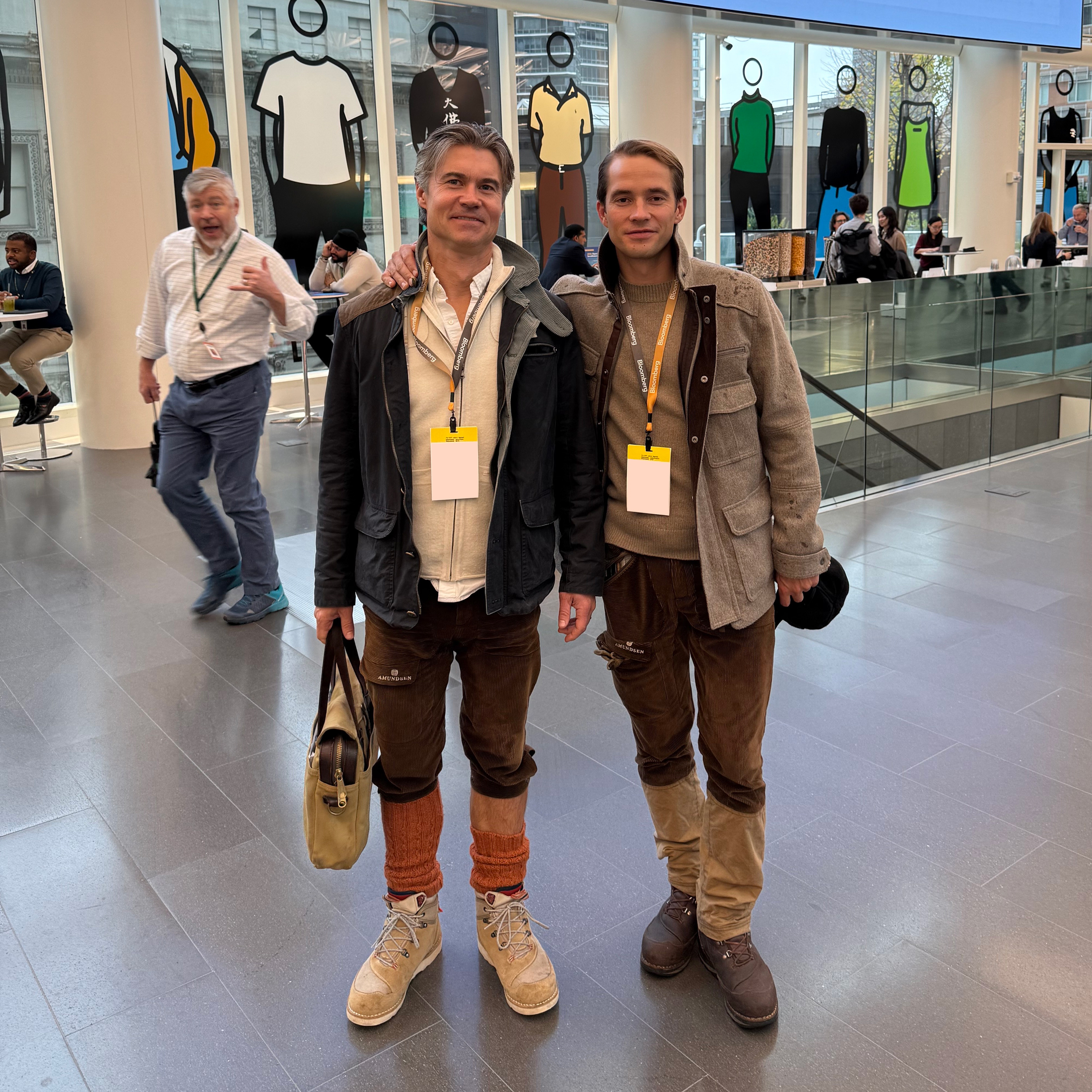
According to Amundsen, Norwegians tend to move more seamlessly between their indoor and outdoor lives. There’s even a Norwegian word for incorporating the wild into your daily life: friluftsliv. Translated roughly, it means “open-air living,” and emphasizes spending time in nature for one’s health, mental wellbeing and longevity.
“It’s a mindset; it’s about living as part of nature, whether you are in the city or in the mountains,” Amundsen says. Frilufstliv is why he designs garments that are simple and durable — and can exist in both worlds. This spoke directly to what I’ve been thinking about with how our clothing should respond to our bodies’ needs, and the real conditions of the environment around us.
I ask how someone can adopt friluftsliv if they have an office job in the city. Does he think it’s fine to wear shorts to work?
“I think everybody should be able to wear whatever they want at the office. Your clothing should tell more about your identity and your way of life than just being a costume within a trade,” Amundsen says. “We believe you should be able to wear our clothes in the woods and on the same day go to a restaurant. Why is that so strange?”
We’re on a trajectory toward comfort and office attire that recognizes our bodies’ needs in a changing world. As the temperature climbs further this week in many cities, maybe that 45% approval rating on shorts will sneak a bit higher, too.
Related:
- Temperature Records Fall as Extreme Heat Hits Eastern Europe
- London Faces Huge Financial Cost Because of Extreme Heat
- Heat Wave Breaks French and UK Records as Temperatures Soar
- Heat Wave Lowers Rhine Levels, Straining Fuel Supply Chains
- Firefighters Warn They’re Ill-Prepared for a Bad Wildfire Season
- Europe Heat Wave Intensifies With France and UK on Red Alert
Was this article valuable?
Here are more articles you may enjoy.
 Large Commercial Property Rates Drop 14.5% in Q2 to Highlight Latest Willis Report
  Viewpoint: The ‘Unbundled’ Insurer Emerges in Age of AI as Value Chain Fragments
  Two Past Hurricanes, OIR Data Give Idea of What to Expect From Isaias in Florida
  Florida Commissioner Suspends A-Cap’s Atlantic Coast Life Over Surplus Issues

