
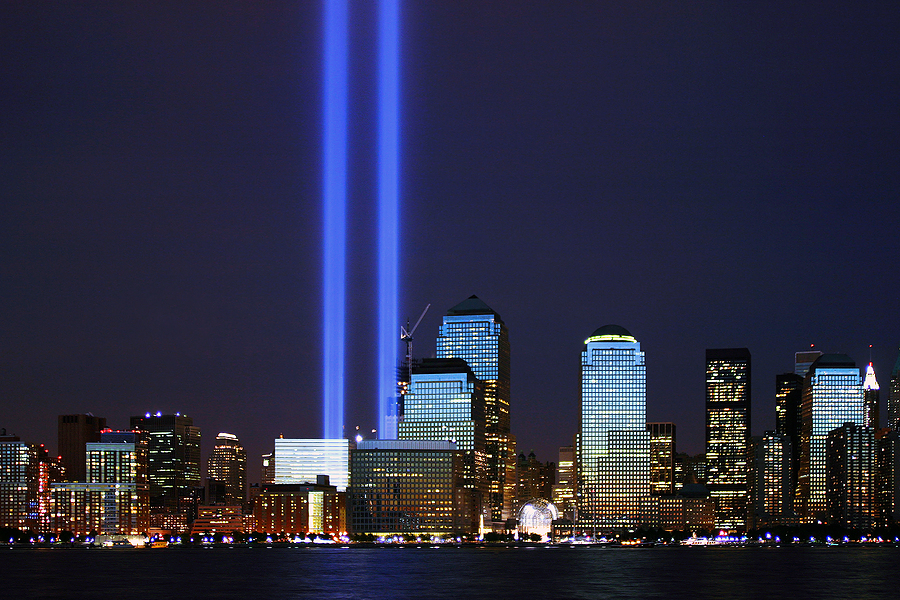
The terrorist attacks of September 11, 2001 shocked the nation and left nearly 3,000 dead.
In today’s dollars, 9/11 caused $60 billion in insured losses. In the aftermath, the industry responded with state-filed requests to exclude terrorism coverage, which had generally been included before the attacks, from standard commercial property/casualty insurance policies. These requests were quickly approved by a majority of states by early 2002.
This overhaul of the insurance industry’s perception of risk prompted a quick government response in order to keep terrorism risk insured – leading to the creation of a federal terrorism backstop initiated late in 2002 with the passage of the Terrorism Risk Insurance Act (TRIA), which protects insurers from another extreme terrorism event.
“September 11 changed the insurance industry in profound ways,” said Loretta Worters, vice president of media relations with the Insurance Information Institute (Triple-I). “It demonstrated that terrorism could produce losses on a scale that was difficult for the private insurance market to absorb on its own, while also showing how essential insurance is to the broader economy.”
On this day 25 years after the devastating attacks on the U.S., we look back at some of the past Insurance Journal coverage to remember the tragedy, the people involved, the legal wrangling, the uncertainty, the impact to the insurance industry and its role going forward, how much has changed, and the way the events of that terrible day still shape insurance.
- Terrorist Acts Strike New York and Washington – Sept, 2001
- Sept. 11, 2001: Terrorist Attacks Strike America – Sept, 2001
- Terrorist Attack Paralyzes Economy; Insurers Face Largest Catastrophe Ever – Sept, 2001
- The Role of Reinsurance in the World Trade Center Attacks – Sept, 2001
- Insurance Companies Had Major Presence in World Trade Center – Sept, 2001
- Industry Weathering World Trade Center Losses, Uncertainties Remain – Nov, 2001
- One Man’s Escape From the Destruction of the World Trade Center – Dec, 2001
- The Illusion of Protection: Terrorism, War and Workers’ Compensation – April 2002
- 2001: The Insurance Industry’s ‘Annus Horribilis’ – April, 2002
- Insured-Property Loss Estimate From Sept. 11 – June, 2002
- 9/11 and Insurance, One Year Later; Terror Attacks Most Complex Disaster in History – Sept, 2002
- Pres. Bush Signs Terrorism Risk Act into Law – Nov, 2002
- Jury Renders Partial Verdict in WTC Recovery Case – April, 2004
- 9/11 Impact on Marsh & McLennan Cos. Nothing Short of Devastation – Sept, 2004
- Half of Compensation to 9/11 Victims Came from Insurance – Nov, 2004
- Jury Rules World Trade Center Attacks Were Two Separate Events – Dec, 2004
- At Last, World Trade Center Rebuilding Ready to Begin – June, 2007
- Insurers Try to Revive 9/11 Suit Against Saudis – Sept, 2011
- 9/11 and Terrorism Risk 10 Years Later – Sept, 2011
- Why 9/11 Changed Everything – Nov, 2011
- 9/11 Remembered: 20 Years Later, the Pain Still Lingers – Sept, 2021
Today, the industry continues to push for another reauthorization of the terrorism insurance backstop. Since TRIA was created in 2002, the program has been reauthorized several times, and has seen some adjustments. The latest reauthorization was at the end of 2019. It is due to expire again on Dec. 31, 2027.
TRIA requires insurers to offer terrorism coverage while the industry has the assurance that if losses from a certified terrorism event (determined by the Secretary of the Treasury) reach certain thresholds (the event needs to exceed $5 million in losses and $200 million in industry losses), the government will step in after a 20% deductible for each insurer.
TRIA, which has never been triggered by a certified terrorism event, has basically allowed every large development across the country to be built with insurance backing.
The good news is there seems to be momentum, with bipartisan support, behind another TRIA extension. In June, the U.S. House of Representatives overwhelmingly passed legislation to extend the public-private partnership through 2034. The TRIA Program Reauthorization Act of 2026 (HR 7128) passed by a vote of vote of 373-15. HR 7128 includes an amendment, upping the threshold to $10 million in 2029.
The industry hopes the measure moves through the Senate to find its way to the president’s desk by the end of the year.
“The nature of terrorism risk has evolved,” Worters said. “The industry today is thinking not only about physical attacks, but about increasingly complex and interconnected risks, including the potential for cyberattacks to cause widespread economic disruption. The challenge is to make sure our risk-management tools continue to evolve as the threats evolve.
“As we remember the nearly 3,000 people who lost their lives on September 11, 2001, we should also remember the lessons that followed: preparedness matters, resilience matters, and having mechanisms in place before a catastrophe occurs matters.”
Was this article valuable?
Here are more articles you may enjoy.
 Viewpoint: Beware These Commercial Auto Endorsements!
  Alabama Pharmacy, Not Agent, at Fault for Not Reading Policy Before $5M Judgment
  How Federal Ban on Intoxicating Hemp Products Will Reshape Risk, Coverage
  Chubb Q3 Net Income Down Slightly on More Catastrophe Losses